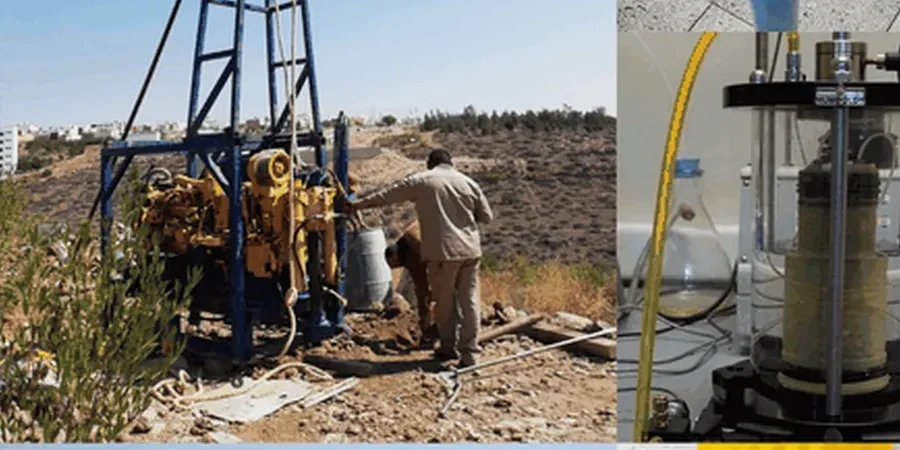
A common mistake in Sudbury is treating every site like solid shield rock. The reality is more complicated. Glacial Lake Algonquin left behind thick sequences of varved clay and silt across the basin, and the contact with the Precambrian bedrock is rarely a clean interface. Weathered zones, pockets of loose till, and groundwater trapped in fractured gneiss create surprises that standard borehole logs miss. A proper soil mechanics study connects the dots between depositional history and foundation performance. Our lab runs consolidated-undrained triaxial tests on undisturbed samples from the Chelmsford silts, and we correlate the results with in-situ SPT data from the sandier ridges near Garson. The Sudbury Basin’s mining legacy adds another layer: backfilled stopes and historical slag fill show up where you least expect them. Understanding the stress-strain behavior of these materials before construction begins saves months of redesign later. We combine field logging with laboratory shear strength and consolidation testing under ISO 17025 protocols, then deliver parameters the structural engineer can actually use.
In Sudbury, the contact between glacial clay and weathered bedrock is never a line—it is a transition zone that demands careful sampling and lab testing.
Our approach and scope
Site-specific factors
Sudbury’s continental climate punishes poor geotechnical assumptions. Winter temperatures drop below -30°C and the frost penetration in exposed silty soils reaches two meters. That seasonal heave cycle opens micro-fissures in the clay crust, letting spring meltwater infiltrate deep into the soil profile. By May the undrained shear strength in the upper three meters can be half of what it was in September. Combine this with the city’s variable bedrock relief—a drill crew can hit refusal at four meters on one lot and at eighteen meters next door—and you have a recipe for differential movement that standard prescriptive footings cannot handle. The risk is not just foundation distress; it is also slope instability along the many creek ravines cutting through town. Pore pressure buildup during rapid snowmelt triggers shallow slumps in the weathered till, and these failures often happen without warning. A thorough soil mechanics study quantifies the seasonal strength envelope so the design accounts for the worst-case spring conditions, not the dry-summer borehole data that looks deceptively favorable.
Reference standards
NBCC 2020 (National Building Code of Canada, Part 4 structural design provisions), CSA A23.3 for concrete structures on soil, referencing geotechnical parameters from this study, ASTM D4767 for consolidated-undrained triaxial compression on cohesive soils, MTO Laboratory Testing Manual for granular material characterization, Ontario Regulation 332/12 (Building Code) geotechnical submission requirements
Complementary services
Foundation design parameter package
Triaxial shear strength, one-dimensional consolidation, and Atterberg limits on undisturbed samples from the bearing stratum. Delivered with a factual report and design recommendations per NBCC.
Slope stability analysis input
Drained and residual shear strength from direct shear and ring shear tests on glaciolacustrine clay. Pore pressure parameters for use in limit-equilibrium models of Sudbury ravine slopes.
Construction quality control testing
Compaction curves, grain size verification, and moisture-density relationships for engineered fill placed over prepared subgrade. ASTM D698 and D1557 methods as specified.
Typical parameters
Frequently asked questions
How long does a complete soil mechanics study take for a Sudbury project?
From mobilization to final report, plan on three to four weeks. Drilling and sampling usually take two to three days on site. Undisturbed samples go to the lab immediately for triaxial and consolidation testing, which runs ten to fourteen business days depending on the number of specimens. The reporting phase includes correlation with field logs, parameter selection, and drafting foundation recommendations. Rush turnaround is sometimes available during the winter months when field crews have more flexibility.
What does a soil mechanics study cost in the Sudbury area?
Budget between CA$4,090 and CA$8,120 for a typical residential or light commercial parcel. The range depends on borehole depth, number of samples, and the testing suite required. A simple program with two boreholes and basic classification testing sits at the lower end. Adding consolidated-undrained triaxial tests, oedometer consolidation, and a detailed interpretive report moves the cost toward the upper end.
Why do Sudbury sites need lab testing even when you hit bedrock shallow?
Shallow bedrock in Sudbury often comes with a weathered mantle of decomposed gneiss or granite that behaves more like dense soil than intact rock. Standard penetration resistance can be misleading in this transition zone. Lab tests on the overburden—even if it is only two meters thick—confirm whether it will compress under load or hold water against the foundation. We have also encountered clay seams within bedrock fractures that go undetected without sampling, and those seams cause differential movement years after construction.